In the past, “age” was a one-word reason for a host of life changes. Fall when you’re 25, and it’s your ego that takes most of the damage, but 50 years later, it would likely be your bones that take the brunt. It’s easy to put this change down to how many birthdays you’ve got under your belt – but it’s actually a series of gradual processes that are at play.
One of the most significant of those processes is the gradual loss of muscle and bone density. Headlines will often tell you that this is hormone-related and inevitable beyond your mid-30s, but that really doesn’t do justice to what’s going on inside your body, or what you can do to counteract it.
Here, we’ll explain the biological reality of ageing and the impact on muscle and bone, why it’s something you might want to have on your radar much earlier than you might expect, why there’s more at play than just hormones, and what you can realistically do about it (without dedicating your life to exercise).
At a Glance
After the age of 30, most adults lose around 3–5% of their muscle mass per decade, and the rate of loss accelerates from around 60. Bone density follows a similar trajectory – particularly for women after menopause. The drivers of this aren’t just hormonal; inactivity and under-eating protein play a huge role too.
The most effective antidote is regular resistance training, paired with enough protein and proper rest. Two to three well-structured sessions a week is enough to slow, stop, and in many cases reverse the decline – at any age.
What’s Actually Happening as We Age?
When it comes to bones and muscles, there are two related but distinct processes going on as we get older. They tend to happen in parallel, and they tend to reinforce each other.
Sarcopenia (Muscle Loss)
Sarcopenia is the medical term for the age-related loss of muscle mass and strength. It begins in your 30s, usually very subtly, and it picks up pace as the decades go on. By the time someone is in their 70s or 80s, they may have lost a third of the muscle they had as a young adult.
Critically, strength tends to drop faster than mass – so a person can lose a lot of capability before the change is visible in the mirror. That’s part of why it tends to creep up on people.
Osteopenia and Osteoporosis (Bone Density Loss)
Though we tend to think of it as scaffolding, bone is actually living tissue. It’s being broken down and rebuilt constantly, and the balance between those two processes shifts as we get older. From around the age of 35-40, most people start losing bone mass slowly. For women, the drop becomes much sharper around menopause, when falling oestrogen levels accelerate bone turnover dramatically – typically a 1.5–2.5% loss per year in the first decade afterwards.
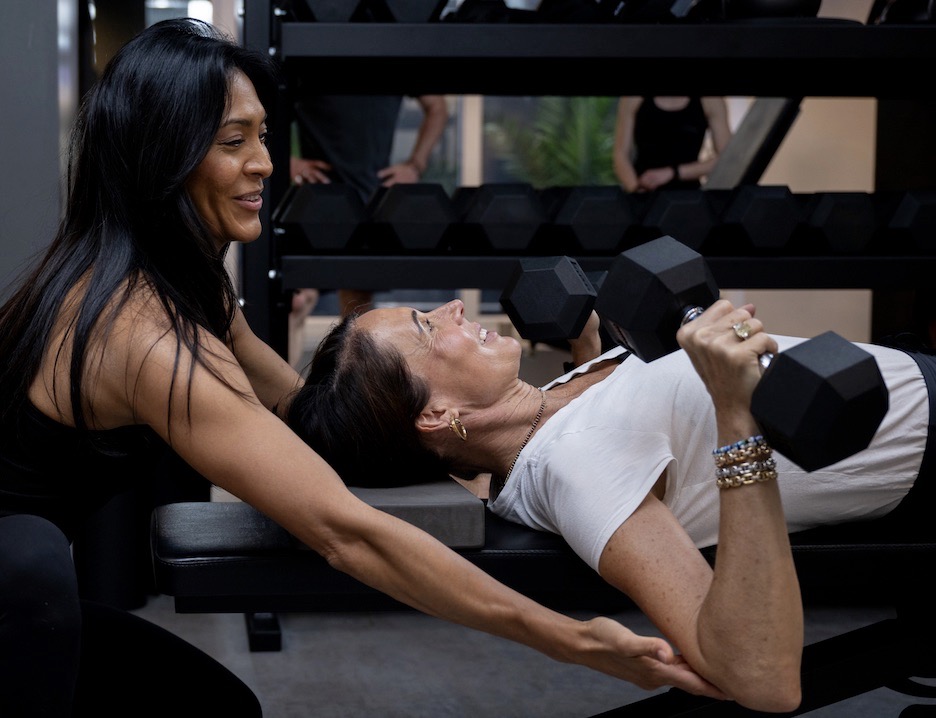
Lose enough bone density, and you reach the diagnostic threshold for osteopenia, then osteoporosis – at which point a fall that would have caused a bruise in your 20s might result in a broken wrist or, worse, a hip fracture.
The Numbers (Roughly Speaking)
Everybody is different, and these figures are averages drawn from a fairly broad set of studies – but they give a sense of the scale of what bone and muscle density loss can look like if nothing is done to push back against it.
| Age Range | Typical Muscle Loss | Typical Bone Loss | Notes |
| 30–50 | 3–5% per decade | 0.5–1% per year from ~40 | Often unnoticed, strength may drop faster than visible muscle |
| 50–65 | Up to 8% per decade | 1.5–2.5% per year for women post-menopause | Hormonal shifts accelerate both processes |
| 65+ | Up to 8% per decade, accelerating | Continues steadily; fracture risk climbs | Falls become the leading cause of injury and loss of independence |
These numbers can look sobering, perhaps even worrying, on paper – but it’s worth saying clearly: these numbers describe what happens when nothing is done. They are not a prediction for someone who trains sensibly, eats reasonably, and looks after their recovery.
Why This Matters Beyond Aesthetics
It would be easy to read all of the above and think, “Well, I’ll just get a bit smaller and weaker – not the end of the world.” That’s a reasonable thought – until you realise the implications go well beyond appearance.
Muscle does a lot of jobs you probably don’t think about. It’s a major contributor to your metabolic rate – meaning the more of it you carry, the more calories you burn when you’re resting or going about the non-strenuous tasks in your day. It plays a central role in blood sugar control, which becomes increasingly important as insulin sensitivity tends to dip with age. And, importantly, it’s the framework that supports your joints, posture, and balance.
Bone density, meanwhile, is the single biggest predictor of whether a stumble in your 70s or 80s ends in a quiet “oops” or a long, painful recovery in hospital. Hip fractures in particular are a serious turning point in many people’s lives – and they’re closely tied to the muscle and bone declines we’ve just described.
Add to that the link between strength in mid-life and all-cause mortality – that is, your overall risk of dying from any cause – and the case becomes hard to ignore. People who maintain decent muscle and strength as they age tend to live longer, and tend to enjoy more of those years in good health.
The Good News
Reading about muscle and bone density loss over time can make your health outlook feel a little futile – especially if you’re new to exercise or haven’t spent any meaningful time in the gym recently. But, in reality, muscle and bone are both highly responsive tissues, and they remain responsive for life.
At the far end of the spectrum, studies on people in their 70s, 80s, and even 90s consistently show meaningful improvements in strength, muscle mass, and (over slightly longer timeframes) bone density when those people start training properly.
In other words – it is genuinely never too late. Starting at 65 is better than starting at 70. Starting at 50 is better than starting at 60. And starting somewhere between 30-45 means you’re protecting an asset you haven’t yet had to rebuild from scratch.
This is one of the most encouraging things in the whole field of health and longevity. The decline is not fixed – your biology is still listening and ready to act.
Why is Strength Training the Go-To Solution for Bone and Muscle Loss?
There’s a temptation, when you hear “stay active as you age,” to picture brisk walks in the Royal Parks and gentle swimming. Both are nice thoughts and both have their place – but – and we say this with a lot of affection for cardio, neither does much to address sarcopenia or bone loss directly.
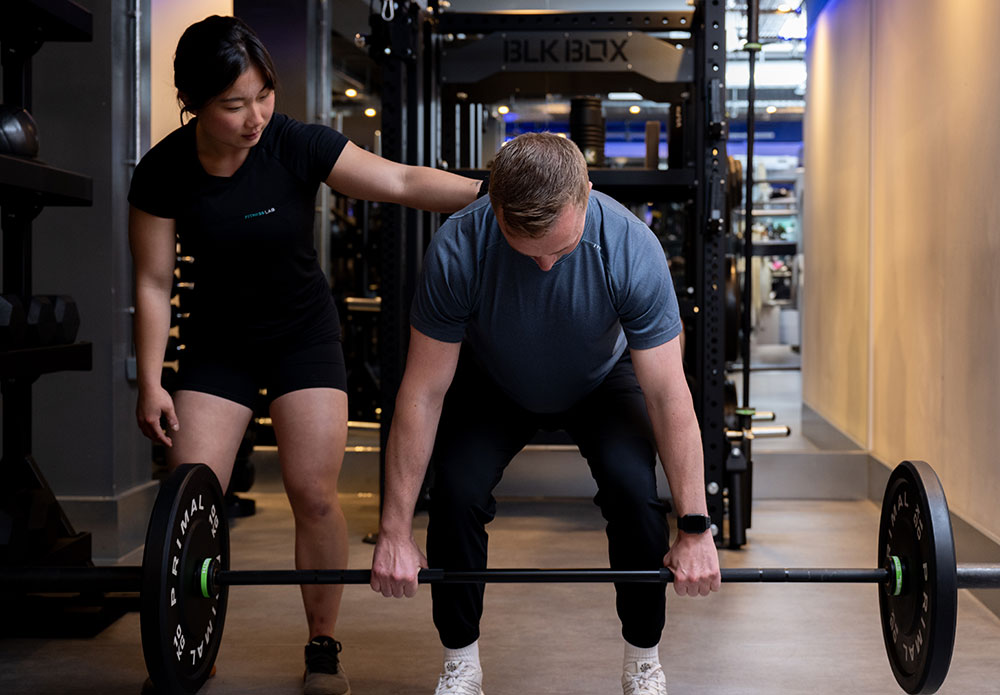
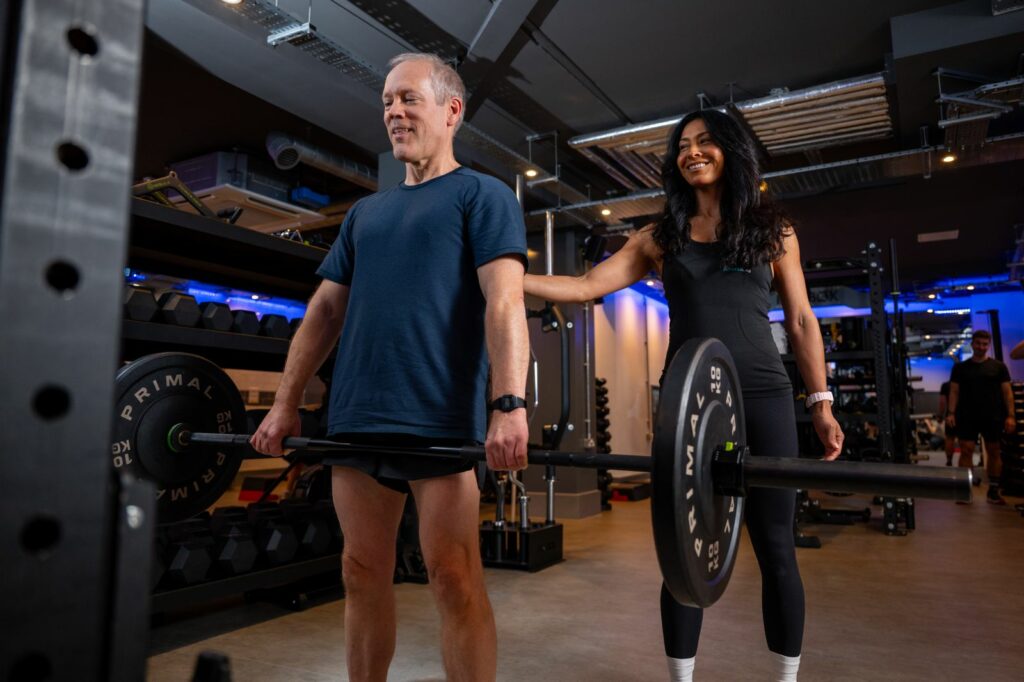
Resistance training works because of mechanical loading. When you ask a muscle to push or pull against something heavier than gravity alone, the muscle responds by adapting – getting stronger, and over time, larger. The bones the muscle attaches to get the same message. Loaded properly, they develop more density to handle the forces being applied through them. This is exactly the effect that gentle walking, however pleasant it is, simply doesn’t trigger to anything like the same degree.
We’ve dedicated a full blog to why resistance training beats cardio for fat loss, but for the purposes of ageing well, the case is more or less the same. Muscle is the main organ to think about when it comes to longevity, and it requires some work to build it.
A Quick Note on Menopause and Perimenopause
For women, the years around menopause are particularly important to understand when we explore this topic.
Falling oestrogen accelerates both muscle and bone loss, and it can do so quite quickly – sometimes faster than people are prepared for. Sleep often suffers at the same time, recovery slows down, and many women describe feeling like their body has stopped responding the way it used to.
None of that is imaginary, and none of it is anyone’s fault – but it’s also not the end of the road.
Strength training during perimenopause and beyond is one of the most powerful interventions available – protecting bone, preserving muscle, supporting mood and sleep, and helping with the shift in body composition that often comes with this stage. A well-structured programme, built around your energy levels and how you’re actually feeling, makes an enormous difference.
What Strength Training for Muscle and Bone Loss Looks Like in Practice
In the past, ideas of building strength had people imagining a result that looked something like a Mr or Miss Olympia contestant – along with the time spent in the gym needed to get there. This couldn’t be further from the truth.
The honest and realistic answer is that two or three properly structured strength sessions a week is enough for the vast majority of people. More than that doesn’t necessarily mean better results; in many cases it means worse recovery and more wear and tear.
What matters is that the sessions are:
- Built around compound movements (squats, hinges, presses, pulls) that load multiple muscles and joints at once – these give you the most return per minute spent training
- Progressive – meaning the load, reps, or difficulty increases gradually over time as you adapt
- Appropriate for where you currently are – not where someone half your age is, and not where you were ten years ago
- Consistent – week after week, for the long term, rather than heroic bursts followed by long gaps
That last point is the one most people get wrong. Going hard for six weeks and then stopping doesn’t build the kind of long-term resilience we’re talking about here. A modest, sustainable habit beats a punishing one that’s hard to maintain every single time.
The Supporting Cast: Protein, Rest, and Movement
Training is the signal that tells your body to build and maintain. Nutrition and rest are what allow it to actually do the building.
Protein needs tend to increase with age, not decrease – which surprises a lot of people. As we get older, our bodies become a bit less efficient at using dietary protein to build muscle, so we need a little more of it to achieve the same effect. Spreading protein evenly across meals (rather than loading it all into dinner) tends to work well. Most adults trying to maintain or build muscle do well on something in the region of 1.6 grams of protein per kilo of body weight per day, though we’d always tailor this to the individual.

Sleep matters too – often a lot more than people realise. A lot of recovery, hormone balance, and muscle protein synthesis happens overnight. If sleep is consistently poor quality or too short, training results follow suit.
Although it might sound like we’ve been dismissive of gentle activity for the specific purposes of muscle and bone, daily movement does still matter as part of a bigger picture. Walking, taking the stairs, gardening, dancing around the kitchen – all of it adds up, supports cardiovascular health, and helps recovery between strength sessions.
When Does it Become Too Late to Start Strength Training?
While age might increase the chance of someone having a condition that makes exercise impractical, all things being equal, there’s no such thing as “too late” to start.
We’ve worked with people starting strength training in their 60s, 70s and beyond, and the changes we see in the first few months are often the most dramatic of anyone we coach. Strength comes back quickly. Balance improves. Confidence – particularly around things like getting up from the floor, carrying grandchildren, or coming down stairs – transforms.
It doesn’t take much. It just takes a thoughtful start, an honest assessment of where you are now, and someone in your corner who knows how to programme around the body in front of them rather than some idealised version of it.
Of course, you might not be that age yet – but if you still wonder if you’ve left it too late, be assured that you haven’t. Even with little or no gym experience through your 20s, 30s, and beyond, there’s absolutely no reason why you can’t become comfortable and confident in a gym space.
Final Thoughts: Ageing Sets the Context, Not the Outcome
Muscle loss and bone density loss are real, and they’re worth taking seriously – but it’s important to understand that they aren’t fate. They aren’t even particularly mysterious or technical. The body responds to load. The body responds to good food and proper rest. The body, frankly, will keep adapting and meeting you where you are as long as you keep showing up.
The version of ageing where you slowly become weaker, more fragile, and more cautious about movement is a default outcome – not an inevitable one. And the version where you stay strong, capable, and confident in your body for decades longer than you might have assumed possible is genuinely available to almost everyone.
At Fitness Lab, we build strength training programmes designed to do exactly that – tailored to your age, your body, your history, and how you actually want to live. Whether you’re starting fresh, coming back after a long break, or working through perimenopause, recovery from injury, or any other complication life has thrown your way, our coaches will put together a plan that works specifically for you and help you build something that lasts.
If you’d like to talk through how this could look for you, a free, unrushed consultation is a great place to start. Complete the form at the bottom of the page, and we’ll be in touch.