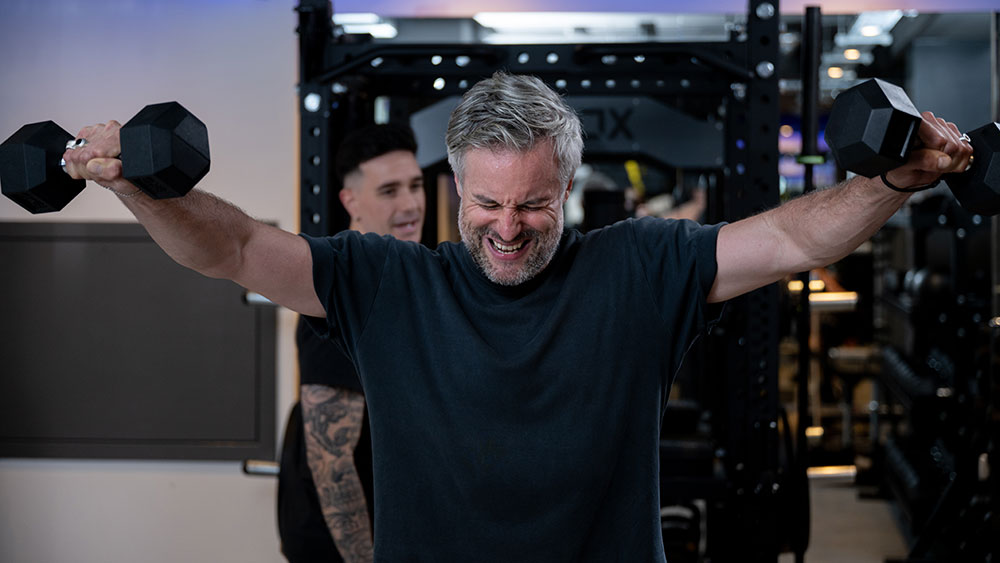
As a guy, the prospect of personal training beyond the age of 40 might not inspire the same excitement or feeling of possibility as it did in your 20s or 30s. At that age, people will comment on how fast your metabolism is or how quickly you can build muscle – but as soon as you’re beyond 40, you’ll typically hear that losing weight or building muscle gets much harder, or impossible.
Put simply, this is not true. Your journey toward more strength, more muscle and reduced body fat is slightly different to how it might have looked in the past – but the changes you’re hoping for are perfectly achievable.
Here, we’ll take a look at why your body needs that journey to be a little different, and what that looks like if you decide that personal training is right for you.
What Really Happens to Muscle After 40
Let’s start with the bit no one enjoys thinking about: age-related muscle loss. The scientific term is sarcopenia, and it’s a real physiological process. After 40, some sources suggest the average man begins losing around 1% of muscle mass per year – but that headline figure can be misleading.
In reality, most of that decline happens in people who don’t train.
Research makes this clear: regular resistance training can dramatically slow the decline, and in many cases, men continue building muscle well into their later decades. Research has also shown that previously untrained men in their 60s and 70s built similar relative strength to younger men when following structured weight training.

In other words, your muscle tissue doesn’t lose its ability to adapt – it just benefits from a better plan.
What Changes: Recovery, Hormones & Wear-and-Tear
This is where training after 40 starts to look different from training at 25.
1. Recovery Slows (But It’s Fixable)
Connective tissues need more time to recover. Post-training muscle soreness can show up a little louder. Heart rate can take longer to settle after hard exercise. That’s normal – and it improves when you train consistently.
2. Hormones Shift Slightly
Testosterone does decrease gradually with age. But lifestyle factors – sleep, nutrition, lifting weights, and maintaining a healthy body composition – have far greater influence than birthdays. Men who strength train, take a little care around nutrition, and keep body fat in check often maintain excellent hormone profiles well into and beyond midlife.
3. Life Load Increases
Work. Stress. Long days at your desk. Commutes. Fewer chances for physical activity. These all tend to become more prevalent after 40 – and they’re things that create more strain than most men realise. They’re all things that influence energy levels and recovery.
4. Old Injuries Speak Up More
That shoulder from rugby, the knee pain after a skiing trip, the back niggle from years of sitting – they matter. Training now requires smarter exercise selection and solid technique – with an awareness of injuries and conditions, not a bloody-minded attitude to push through.
Ultimately, thinking about these factors is why many men find personal training so effective in their forties: you get programming built around you and your history, not an off-the-shelf approach “body transformation” that’s designed to sell magazines or assumes you’ve got 10 hours a week to spend in the gym.
What Stays The Same: Your Ability to Get Stronger
All the talk of inevitable changes beyond 40 fails to recognise that, at virtually any age, your muscles still respond exceptionally well to strength training. Such is the cultural weight that comes with the ‘inevitable decline’ narrative – this surprises most guys.

Age doesn’t turn off the mechanisms of muscle growth. Muscle groups respond to tension and progressive overload the same way they always have. What changes is the importance of balance – pairing resistance training with recovery, nutrition, and appropriate loading.
When you get these right, you don’t just maintain muscle mass. You build it – often faster than expected.
How Men Over 40 Should Train (If They Want Real Results)
Most men who struggle to get results after 40 aren’t doing anything “wrong” – they’re just following a training blueprint their body has outgrown.
1. Strength Training Comes First
If you want better posture, more energy, and a stronger metabolism, strength work needs to be your foundation. Think of it as the backbone of your fitness journey, especially if your goals include improving muscle tone, reducing body fat, or increasing functional strength.
Strength training for men over 40 should prioritise:
- correct form (technique) over speed
- safe loading
- joint-friendly movement
- progressive overload over months, not days
2. Choose Joint-Friendly Variations
Your body doesn’t need you to prove anything. It needs movements it tolerates well.
If barbell back squats irritate your knees, split squats or goblet squats build the same muscle groups. If overhead presses feel cramped, avoid behind-the-neck presses and use dumbbells or cables instead. If running aggravates your joints, rowers, incline walks, or even kettlebell swings offer similar cardiovascular and muscular benefits.
The goal isn’t the method that makes you stand out as the older guy still keeping up with the 20-somethings in the gym – it’s the correct and deliberate stimulus for progression.
3. Quality Over Ferocity
Personal trainers who cite “No pain, no gain” or mantras that compare anyone to wild animals are squarely aiming their service at younger guys. In reality, going all-out every session rarely works now. Instead, using lighter weights with excellent form will always deliver more weight-lifting progress than trying to grind through heavy sets with compromised mechanics.

This is where a good personal trainer makes a big difference – especially when learning compound movements like deadlifts, rows, or squats; where technique is everything.
4. Cardio You Can Actually Stick To
Steady aerobic work supports heart health, blood flow, and recovery. A couple of shorter intervals each week can help, but they’re not mandatory. This is often good news for busy people who don’t fancy the idea of putting 5k runs or swimming sessions into an already packed schedule.
If you’re restarting training after a gap or trying to lose weight sensibly, this approach often works because it balances a little more movement against a busy life. Cardio is a good compliment – but brisk walks that actually happen are infinitely better than good-intentioned ‘big’ sessions that don’t.
5. Listen to Your Body (And Interpret What You Hear Correctly)
There’s a fine balance here: it’s essential that you avoid pushing through sharp pain, but don’t assume effort itself is dangerous. Most men underestimate how capable their bodies still are.
A good personal trainer will help you understand the difference between injury and weakness. For many people, tight shoulders or an aching lower back (as just two of many examples) are more of an indication that stretching and resistance training are needed – rather than an area that is fragile and shouldn’t be exercised.
Nutrition for Men Over 40: Simple, Not Extreme
Nutrition becomes more influential after 40 because training alone won’t counter years of low protein or irregular eating. But – you don’t need anything complicated – complicated is more often an indication that someone is trying to sell you an app or a diet plan.
Prioritising Protein
Aiming for 1.2–1.6g of protein per kg of bodyweight helps stimulate muscle growth and maintain lean mass. Without it, you’ll struggle to change body composition – no matter how good your programme is.
Consuming Enough Calories to Support Training
Aggressive dieting is shown to slow metabolism, reduce energy levels, and accelerate muscle loss. A smaller calorie deficit – paired with weight training – works far better long-term.
Micronutrients & Hydration Matter
Men over 40 often feel drained simply because they’re dehydrated or low in magnesium or vitamin D. Although these are just examples, small basics like these support bone density, mood, and recovery.
Why Training Over 40 Can Be More Rewarding Than Your Twenties
Something that surprises most guys who start or pick back up resistance training is that it often feels better now than it did back then. Typically, guys beyond 40 are more consistent, they understand their body better, and they appreciate the progress they see far more.

While it might not initially involve huge weights, that consistency actually ends up building fitness levels and strength that earlier stop-start cycles never quite achieved – leading to a more impressive outline, suits and jeans that fit that little bit better, and a confidence that only comes with experience.
The Bigger Picture: Longevity and Healthspan
Perhaps one of the biggest benefits of a strength programme beyond your 40s is quite how significantly it improves health outcomes long into the future. While you’re likely some way off thinking about your 70s and beyond right now – strength that’s maintained from middle age is one of the single best ways to improve your healthspan.
Why? Well:
- Muscle mass protects joints.
- Functional strength protects independence.
- Improving body composition improves blood pressure and reduces chronic disease risk.
- Weight training gives your body a buffer against the slower metabolism that tends to show up with age.
A recent study even linked grip strength – a simple proxy for overall strength – to lower all-cause mortality. Not because grip strength is magic, but because it reflects a system that’s been trained, maintained, and cared for.
Promoting this kind of healthspan now isn’t just about adding years – it’s about extending the years in which you enjoy a healthy body.
Personal Training For Men Over 40: A Summary
If you’ve landed on this page wondering whether personal training can help you get back in shape after 40, the answer is simple: yes – and probably faster than you expect.
Your body isn’t subject to the deterioration that many people will have you believe – it’s simply waiting for the right approach: strength training, purposeful exercise selection, proper nutrition, and recovery habits that match your stage of life. You’ll be astounded at what’s possible.
If you’d like to explore how a Fitness Lab coach can tailor this to your fitness goals – from building muscle to losing body fat to improving energy levels – you can book a free, unrushed consultation and find out what’s possible.