If you’ve experienced it, you’ll understand why back pain has a way of changing how people think about movement.
Movements that once felt routine – bending, lifting, even tying your shoes – can suddenly feel risky. It’s no surprise that many people respond by becoming more cautious, often avoiding strength training altogether in the hope of “protecting” their back.
However, the most important thing to understand is this: avoiding movement entirely is rarely the best solution.
In fact, a growing body of research suggests that appropriate strength training is one of the most effective ways to recover from back pain and reduce the risk of it returning.
So, when it comes to safe strength training after back pain, the goal isn’t to avoid loading the spine – it’s to reintroduce it gradually, intelligently, and with confidence.
Understanding Back Pain: It’s Not Always What It Seems
It’s worth starting with a key concept – and it’s one that often surprises people:
Pain does not always equal damage.
Most cases of lower back pain are classified as non-specific low back pain, meaning there is no single identifiable structural issue like a fracture or injury. Instead, pain is influenced by a combination of factors, including tissue sensitivity, movement patterns, stress, and even previous experiences with pain.
It’s easy to assume that if something hurts, it must be injured in a fragile or dangerous way. But modern pain science shows that the body is far more adaptable than that.
Research instead suggests that, the majority of the time, pain is a protective response, not a direct measure of tissue damage. This means your back can feel painful without being structurally compromised in a way that prevents movement or loading.
This distinction is crucial, because it shifts the focus from “protecting the back at all costs” to “gradually rebuilding its capacity.”
Why Avoiding Strength Training Can Make Things Worse
After experiencing back pain, many people instinctively reduce activity levels. In the short term, this kind of “take a couple of days off and grab some ibuprofen from the chemist” approach can feel helpful. But over time, it often creates a different problem.
When the body is exposed to less movement and less load, several things happen:
- Muscles become weaker
- Tissues become less tolerant to stress
- Movement confidence decreases
- Fear of certain exercises increases
This creates a cycle where the back becomes more sensitive, not less.
The science is really clear on this – remaining active is one of the most important factors in recovery from low back pain. Similarly, exercise-based interventions have been shown to reduce both pain and recurrence rates.
So, while rest might feel like the safe option, study after study tells us that prolonged avoidance of strength training can actually seriously delay recovery.
What Does “Safe” Strength Training Actually Mean?
So, if complete rest isn’t the answer, what does “safe” training look like?
Well firstly, it doesn’t mean avoiding all spinal loading. It means managing load appropriately.
From a physiological perspective, the spine – like muscles, tendons, and bones – adapts to stress. This is based on fundamental principles of tissue adaptation.
In simple terms:
The body gets stronger in response to the demands placed on it.
The key is ensuring those demands are progressive rather than excessive.
This is where structured strength training becomes incredibly valuable. Instead of random or uncontrolled movement, exercises are selected and progressed in a way that gradually increases tolerance.
What Are The Key Principles for Safe Strength Training After Back Pain?
- Start below your current capacity – Training should feel manageable, not overwhelming. A slight challenge is fine; sharp or escalating pain is not.
- Prioritise movement quality – Controlled, well-executed repetitions are far more important than lifting heavy weights early on.
- Use gradual progression – Increase load, range of motion, or complexity over time rather than all at once.
- Stay consistent – Regular exposure to appropriate movement is what drives adaptation and recovery.
- Don’t fear discomfort entirely – Mild, manageable discomfort during or after exercise can be normal and does not necessarily indicate harm.
- Adapt exercises when needed – Variations and regressions allow you to train safely while still making progress.
These principles form the foundation of graded exposure, a widely used approach in rehabilitation that helps rebuild confidence and physical capacity simultaneously.
What Is The Role of Strength Training in Long-Term Back Health?
One of the most overlooked aspects of back pain is recurrence.
Many people experience an episode of back pain, recover, and then find it returns months later. This often happens because the underlying issue – reduced load tolerance – hasn’t been fully addressed.
Strength training plays a key role in breaking that cycle.
By improving the strength of muscles around the spine, hips, and core, you create a system that is better equipped to handle everyday demands. Movements like lifting, bending, and twisting become less stressful because the body is more capable.
Interestingly, exercises that people often fear – such as deadlifts or squats – can be some of the most beneficial when introduced appropriately. These movements train the body to handle load in a controlled and efficient way.
However, the emphasis should always be on progression and technique, not jumping straight back into high loads.
How Good Coaching Makes a Difference
This is where personal training becomes particularly valuable.
A well-qualified coach doesn’t just prescribe exercises – they adjust variables in real time based on how your body responds.
For example, if a traditional deadlift feels uncomfortable, a coach might:
- Reduce the range of motion
- Adjust the load
- Modify the tempo
- Introduce an alternative variation
Over time, these adjustments allow you to build confidence and strength without pushing beyond your current limits.
At Fitness Lab, this approach is central to how programmes are designed. Your coach will make sure sessions are structured to balance progression with safety, ensuring that you’re moving forward without unnecessary setbacks.
What Are Some Common Exercise Mistakes After Back Pain?
While intentions are usually good, there are a few common pitfalls that can slow progress if you’re in the gym following back pain.
One of the biggest is doing too much too soon. After a period of rest, it’s tempting to jump straight back into previous training levels. However, the body often needs time to rebuild tolerance.
On the other end of the spectrum, some people become overly cautious and avoid entire categories of movement – particularly anything involving bending or lifting. Over time, this can reinforce fear and reduce overall capacity.
Another common issue is relying solely on passive treatments (like rest or massage) without incorporating active rehabilitation through movement.
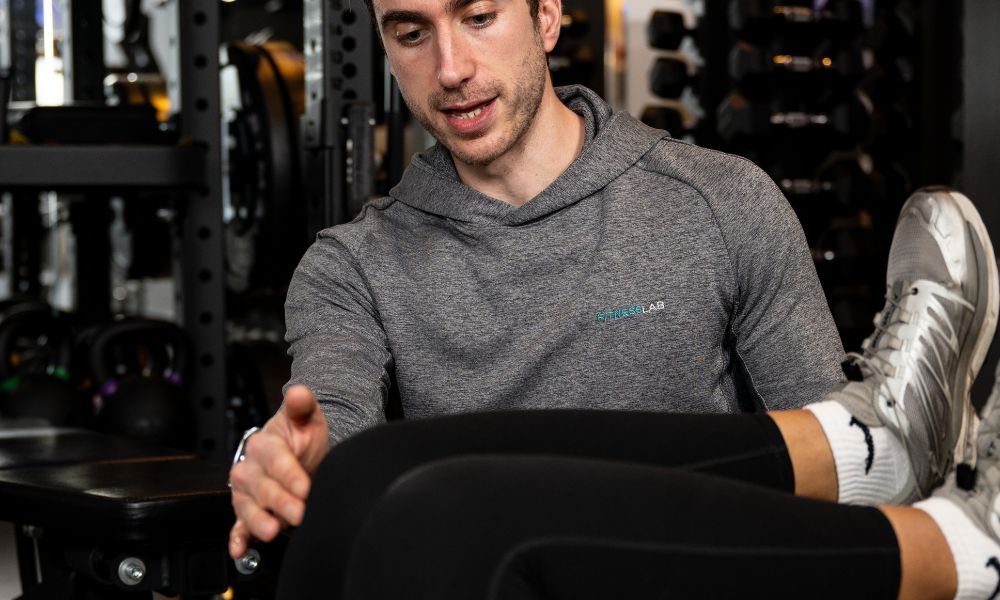
The most effective approach typically sits in the middle: progressive, well-structured training combined with appropriate recovery strategies. If it feels like that’s a lot to manage either entirely by yourself or through an exercise app, it’s a good indication that working with a personal trainer is worth considering.
When to Be More Cautious – And Seek Medical Advice
While most cases of back pain respond well to gradual exercise, there are situations where additional caution is needed.
If pain is severe, worsening, or accompanied by symptoms such as numbness, tingling, or loss of strength in the legs, it’s important to seek guidance from a qualified healthcare professional.
Similarly, if back pain follows a significant trauma or does not improve over time, further assessment may be necessary.
Strength training can still play a role in recovery, but it should be integrated alongside professional medical advice.
Safe Strength Training Around Back Pain: Some Final Thoughts
Back pain can understandably make people hesitant about returning to the gym. However, the evidence is clear: the spine is not fragile, and avoiding movement entirely is rarely the best path forward.
Instead, safe strength training focuses on gradual progression, controlled movement, and building confidence over time.
While one-to-one coaching offers the highest level of individualisation – particularly for those navigating previous injuries – the most important factor is taking a structured and consistent approach.
Done correctly, strength training doesn’t just help you recover from back pain – it helps reduce the likelihood of it returning in the future.
If you’re unsure where to start, or want guidance tailored to your specific situation, you’re always welcome to explore it further. At Fitness Lab, we offer a free consultation where you can discuss your training history, concerns, and goals to determine the safest and most effective way forward.
What’s more, we have excellent links with physios and other musculoskeletal specialists – so we’re happy to point you in the right direction if you’d like to approach the issue from more than one angle.